

Space & Aviation
Explore Space & Aviation across the Smithsonian through stories, events, and exhibitions. Use the filters to browse by format, then bookmark events and exhibitions to keep track of what you want to visit or attend.
522 results
At the National Air and Space Museum, Snoopy is one busy beagle.

A newly discovered object may be a key to unlocking the true nature of a mysterious class of sources that astronomers have found in the early universe in recent years.
After the launch of NASA’s James Webb, a new class of distant objects was found. Chandra spotted one of these “little red dots” that gives off X-rays unlike the others. This suggests that there may be a new phase of growing supermassive black holes.

A team of researchers led by postdoctoral researcher and NASA Sagan Fellow Sebastian Zieba of the Center for Astrophysics | Harvard & Smithsonian and Laura Kreidberg, Max Planck Institute for Astronomy Director and study PI, analyzed the surface . Shortened snippet. View full page for more details.

Astronomers have recently published new research confirming three bodies orbiting the dynamic exoplanet system TOI-201. They include a super-earth (TOI-201 d), a warm Jupiter (TOI-201 b) and a brown dwarf (TOI-201 c). Astronomer Karen Collins of . Shortened snippet. View full page for more details.
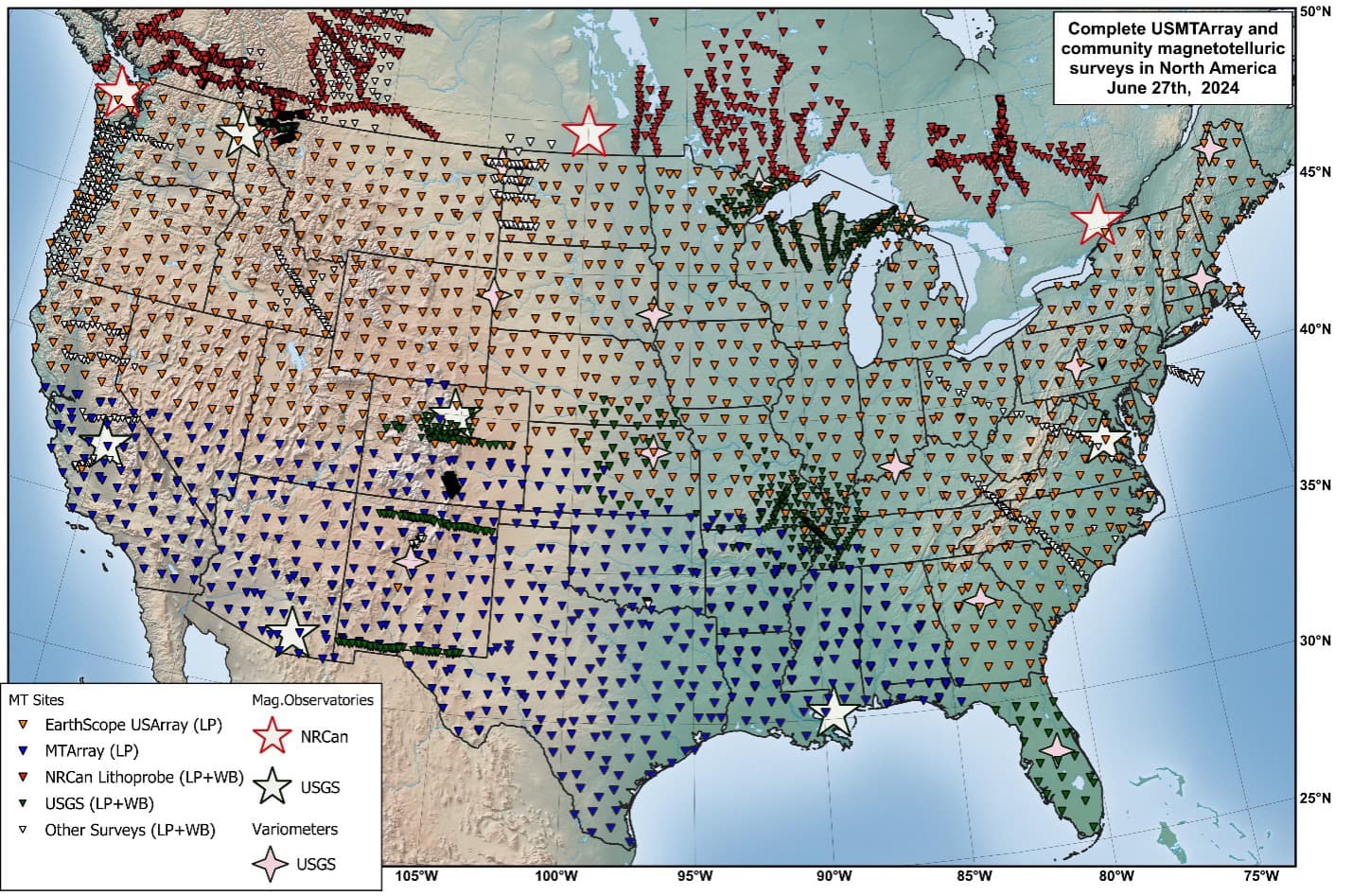
Scientists have developed new tools to detect solar storms before they strike by mapping the hidden electrical structure beneath our feet, revealing how the ground itself could influence the impact on our power grid.

Worlds this small and distant are thought to be too cold and have too little surface gravity to hold onto gases. But the findings suggest that icy, rocky objects in the solar system’s outer reaches are more dynamic than we thought.

Two decades ago, the International Astronomical Union—which defines and names celestial bodies—redefined the criteria for being a planet, putting Pluto into the new category of dwarf planet.